
Why Your Face Holds Stress (And How Gua Sha Helps Release It)
Many women notice it at the end of a long day.
The jaw feels tight.
The forehead heavy.
The eyes slightly puffy or tired.
It’s easy to assume this is simply part of getting older, or the result of a busy life.
But very often, what you’re seeing is something else entirely.
Your face is responding to stress held in the nervous system.
The muscles of the face, the flow of lymphatic fluid, and the overall tone of the skin are deeply connected to how calm or overwhelmed the body feels. When life becomes busy or demanding, the face often carries that tension without us even realising.
Over time this can show up as tightness, puffiness, dullness, or a feeling that the face looks more tired than usual.
Understanding why this happens is the first step in learning how to support your skin in a gentle, natural way.
How Stress Shows in the Face
The face contains dozens of small muscles that respond quickly to emotion and stress. Unlike other areas of the body, these muscles are used constantly throughout the day.
When we are concentrating, worrying, or feeling under pressure, certain patterns begin to appear.
Jaw tension is one of the most common. Many people clench their teeth without noticing, especially during busy or stressful periods.
Forehead tightness can develop from repeated expressions such as frowning or concentrating, creating a feeling of heaviness across the brow.
Puffiness around the eyes can appear when circulation slows and fluid begins to accumulate.
These patterns aren’t a flaw or a failure in your skincare routine. They are simply signs that the body has been holding a little more tension than usual.
The Nervous System and the Face
Your face is closely connected to the nervous system.
When the body is in a state of stress or constant activity, the muscles of the face often remain slightly contra
Why Your Face Holds Stress (And How Gua Sha Helps Release It)
Many women notice it at the end of a long day.
The jaw feels tight.
The forehead heavy.
The eyes slightly puffy or tired.
It’s easy to assume this is simply part of getting older, or the result of a busy life.
But very often, what you’re seeing is something else entirely.
Your face is responding to stress held in the nervous system.
The muscles of the face, the flow of lymphatic fluid, and the overall tone of the skin are deeply connected to how calm or overwhelmed the body feels. When life becomes busy or demanding, the face often carries that tension without us even realising.
Over time this can show up as tightness, puffiness, dullness, or a feeling that the face looks more tired than usual.
Understanding why this happens is the first step in learning how to support your skin in a gentle, natural way.
How Stress Shows in the Face
The face contains dozens of small muscles that respond quickly to emotion and stress. Unlike other areas of the body, these muscles are used constantly throughout the day.
When we are concentrating, worrying, or feeling under pressure, certain patterns begin to appear.
Jaw tension is one of the most common. Many people clench their teeth without noticing, especially during busy or stressful periods.
Forehead tightness can develop from repeated expressions such as frowning or concentrating, creating a feeling of heaviness across the brow.
Puffiness around the eyes can appear when circulation slows and fluid begins to accumulate.
These patterns aren’t a flaw or a failure in your skincare routine. They are simply signs that the body has been holding a little more tension than usual.
The Nervous System and the Face
Your face is closely connected to the nervous system.
When the body is in a state of stress or constant activity, the muscles of the face often remain slightly contracted. Breathing may become shallower, circulation slows, and the face can begin to hold that tension.
When the nervous system begins to relax, something interesting happens.
The jaw softens.
The forehead smooths.
The skin often looks brighter.
This is why treatments that encourage relaxation often have such a visible effect on the face. They allow the body to shift out of tension and into a calmer state where circulation and natural processes can function more freely.
The Role of Lymphatic Flow
Another reason stress shows on the face is connected to the lymphatic system.
The lymphatic system helps move fluid, waste products, and toxins away from tissues. Unlike the circulatory system, it does not have a pump. Instead, it relies on movement and gentle stimulation.
When we are tired, stressed, or sitting for long periods, this flow can slow down.
The result can be:
- puffiness around the eyes
- heaviness in the cheeks
- a slightly dull or congested appearance in the skin
Encouraging healthy lymphatic movement helps the skin appear clearer, fresher, and more vibrant.
How Gua Sha Helps Release Facial Stress
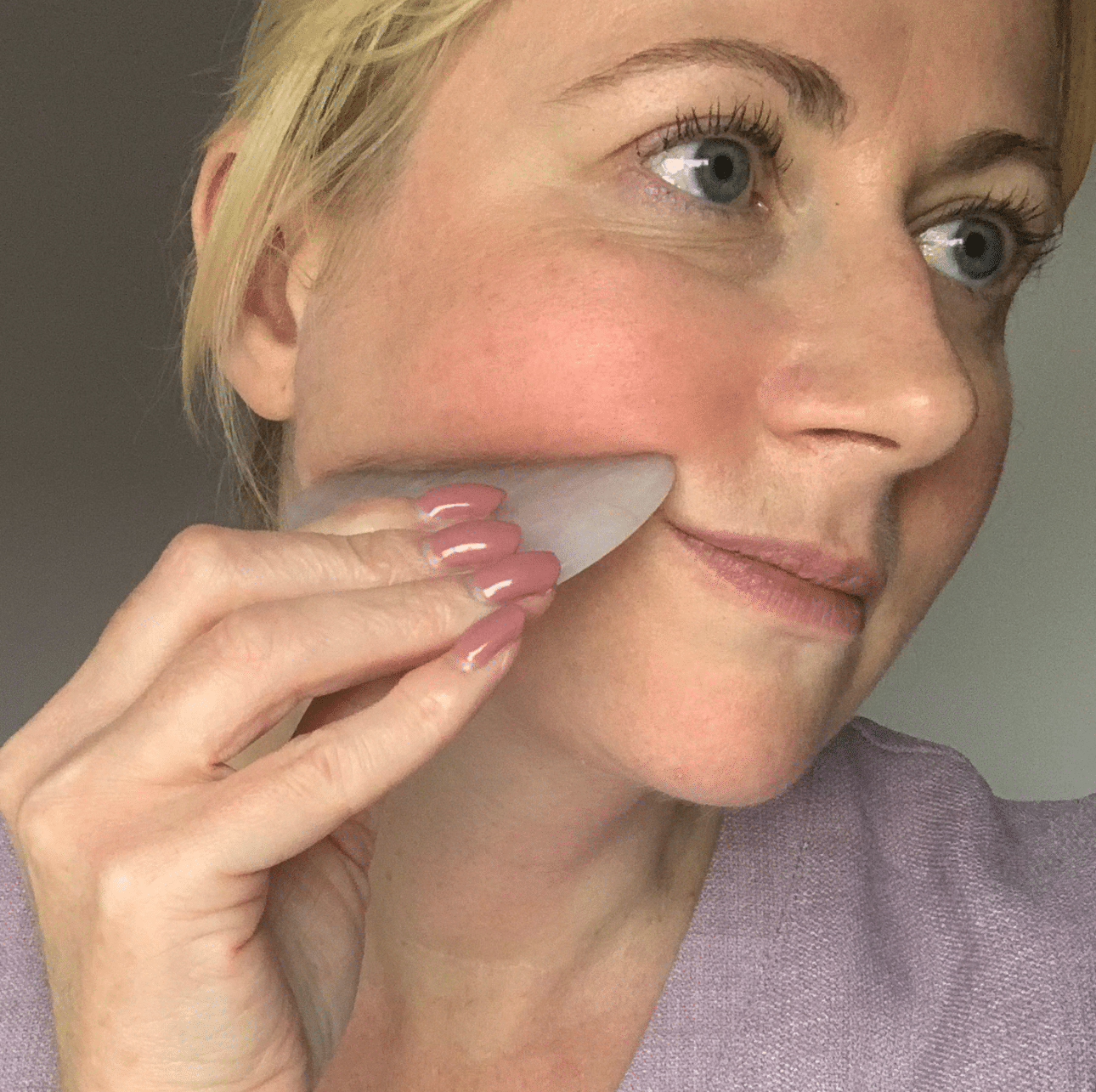
Gua Sha is a gentle technique that uses a smooth stone to glide across the skin with light, intentional movements.
When practiced correctly, it can support several important processes in the face.
Releasing muscle tension
The gentle movements encourage tight facial muscles to soften, particularly in the jaw and forehead.
Encouraging lymphatic drainage
Specific directions help guide fluid through the natural lymphatic pathways of the face and neck.
Supporting circulation
The skin receives increased blood flow, which can help restore a natural glow.
But beyond these physical effects, many people notice something else.
The ritual itself is calming.
As the stone moves slowly across the skin, breathing often slows and the nervous system begins to settle. This combination of relaxation and gentle stimulation is what allows the face to release the tension it has been quietly holding.
A Small Ritual That Supports the Skin
One of the most beautiful things about Gua Sha is its simplicity.
You don’t need long treatments or complicated routines. Even a few minutes of gentle movement can help encourage the face to soften and restore healthy circulation.
Over time, many women notice:
- less tension in the jaw and forehead
- reduced puffiness around the eyes
- more defined facial contours
- brighter, healthier-looking skin
Most importantly, it becomes a moment of calm in the day — a small ritual that supports both the skin and the nervous system.
Learning the Ritual Properly
Many people already own a Gua Sha tool but feel unsure how to use it correctly. The direction of movement, pressure, and understanding of lymphatic flow all make a difference.
If you’d like to learn the full step-by-step technique, you can explore the Facial Sculpting Ritual Gua Sha Course, where I guide you through gentle movements designed to lift, sculpt, and release tension in the face.
You can learn more about the course here.
Ready to give it a go at home click here.
Sometimes the face isn’t asking for more products.
Sometimes it simply needs a moment to soften, breathe, and release the stress it has been carrying.